A dew sufficed itself
And satisfied a leaf,
And felt, “how vast a destiny!
How trivial is life!”The sun went out to work,
The day went out to play,
But not again that dew was seen
By physiognomy.Whether by day abducted,
~Emily Dickinson
Or emptied by the sun
Into the sea, in passing,
Eternally unknown.
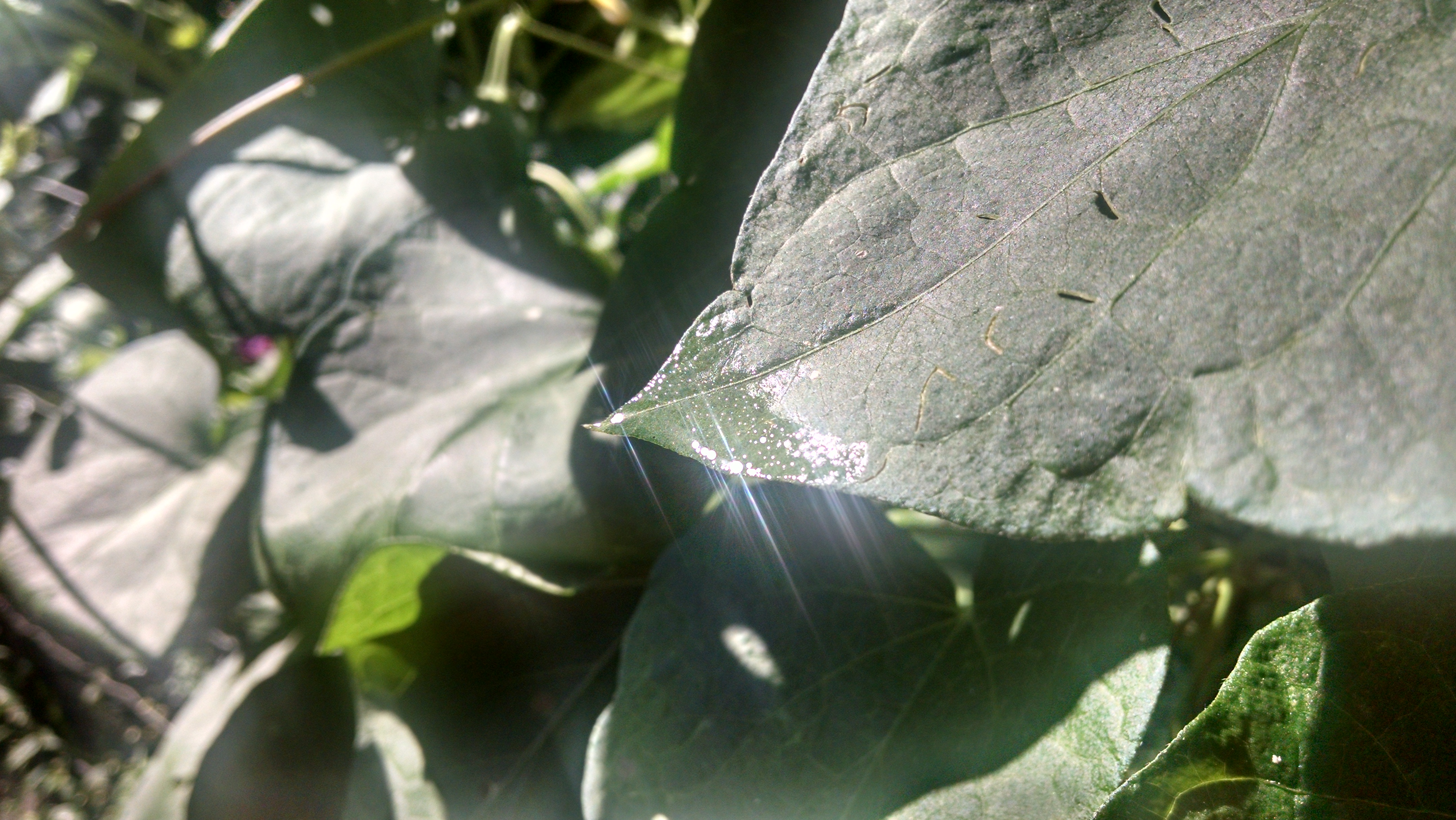
Summer mornings in the Valley are dew-soaked and sparkling. As the sun climbs the arc of the sky, its heat burns away the liquid diamonds. Shaded, they linger for hours, but in the direct light of the sun, the moon’s tears dissipate quickly.
We are the dew of Dickinson’s poem, so certain in our smallness, our ephemerality. We suffice ourselves; we believe we are the answer to our own questions, the center of our own orbits. Like the dew, though, we vanish. What do we leave behind? And where do we go? What happens to the dew? Is it “by day abducted”–does it evaporate back into the same changeless cycle, or will it at last find the sea?
That Dickinson uses the phrase “in passing” suggests that the sun’s dropping of the dew into the sea is a casual gesture, offhanded. The dew that was so sufficient unto itself is, to the sun, a literal drop in the ocean. A drop of dew, to itself, is everything. In the vastness of the sea, it becomes nothing, eternally unknown.
And yet what is the sea but drops of water, gathered together from across a spinning planet, across lifetimes and ages, across space and time, all things coming together in one great final infinity?
 The Emily Project