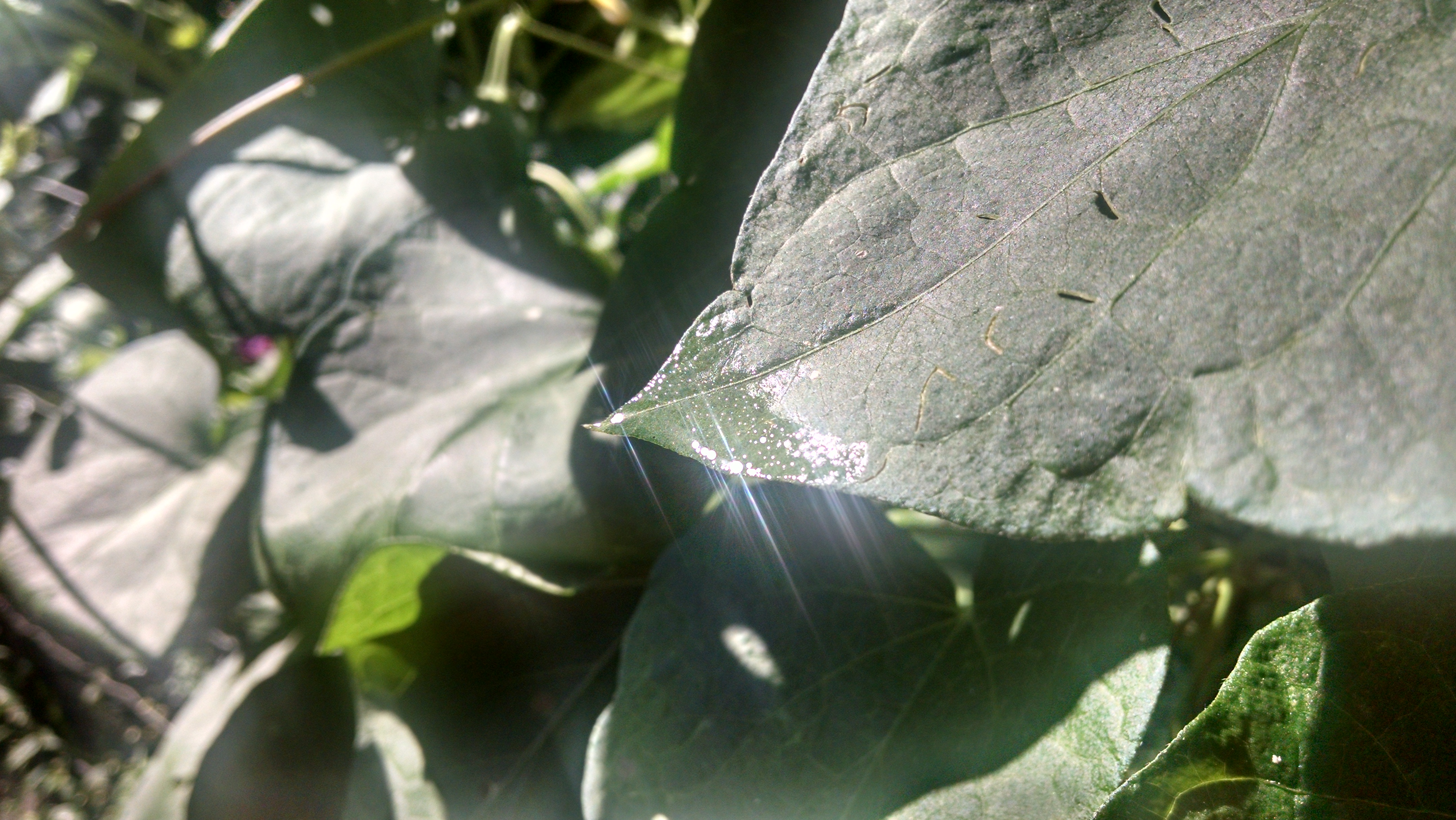
A timely reminder

I had no time to hate, because
The grave would hinder me,
And life was not so ample I
Could finish enmity.

Nor had I time to love; but since
Some industry must be,
The little toil of love, I thought,
Was large enough for me.

~Emily Dickinson

The world seems so hate-filled lately. The news is full of accusations and phobic people, the internet is full of trolls, and people “unfriend” each other over online spats.

But who has time for that?

Life is short. There’s barely enough time to love anybody, let alone hate. Love is enough to keep anyone busy for a lifetime.

Unseen

To fight aloud, is very brave –
But gallanter, I know
Who charge within the bosom
The Calvalry of Wo –

Who win, and nations do not see –
Who fall – and none observe –
Whose dying eyes, no Country
Regards with patriot love –

We trust, in plumed procession
For such, the Angels go –
Rank after Rank, with even feet –
And Uniforms of snow.

~Emily Dickinson

Maybe your disability is invisible.

Maybe your wound is not flesh.

Maybe there is no reason anyone can see or that you can explain why getting out of bed is a Herculean effort.

Maybe you are fighting in silence because you don’t have the words. Maybe you are fighting in silence because you are afraid that to speak out would bring down something worse. Maybe you are making all the noise you can but no one hears you.

Maybe you are stuck–in a place, a job, a relationship, a mindset, an illness. Maybe you cannot see a way out. Maybe no one sees you. Maybe they refuse to see you.

Maybe you have been taught to be silent. Maybe you have been threatened to be silent. Maybe you have to be silent to protect yourself, someone you love. Maybe every time you speak out, you are told to be quiet, that you’re too loud, that you don’t have it that bad, that you don’t have anything to complain about, that you’re being too sensitive, that you’re a snowflake, that no one cares.

BUT

You are here.

Maybe you don’t think you’re strong, but you are.

Definitely you are still here.

Definitely you have survived up to this point. Maybe you have come through the darkest part of the forest, the places where nameless monsters dwell. Maybe you are almost out. Maybe you are still in the middle, so lost that you cannot say where you are or even where or when you entered. But you exist, and this matters.

Definitely you are brave. Because being brave is not the absence of fear. It is being choked by fear–filled up to the brim by fear so it is seeping from your pores and snatching your breath–and still going, still seeking the way out of the dark woods.

Definitely you are worth your place in this world. Definitely you are irreplaceable. Definitely you matter.

A small town

I went to heaven,—
’T was a small town,
Lit with a ruby,
Lathed with down.
Stiller than the fields
At the full dew,
Beautiful as pictures
No man drew.
People like the moth,
Of mechlin, frames,
Duties of gossamer,
And eider names.
Almost contented
I could be
’Mong such unique
Society.

~Emily Dickinson
Mechlin lace via Wikimedia Commons

What fascinates me most about this poem is the depiction of heaven as a “small town.” Paradise is described in diminutive terms–it is illuminated not by a sun but “with a ruby.” Its people are described in terms of things soft, ephemeral, fairy-like. The Mechlin lace Dickinson mentions is very precise, painstaking, the images within it perfectly bordered and contained. Heaven sounds magical yet tiny, beautiful yet bound.

How are we to understand this smallness? Is heaven so exclusive? Is this a commentary on how many people could really get into it? Or is it a reflection of a different take on heaven? The speaker says she could be “almost contented” there–implying that she would never be perfectly content. Maybe heaven, as a single place, is constraining no matter what size it may be.

A Sunday poem

Some keep the Sabbath going to church;
I keep it staying at home,
With a bobolink for a chorister,
And an orchard for a dome.

Some keep the Sabbath in surplice;
I just wear my wings,
And instead of tolling the bell for church, Our little sexton sings.

God preaches,—a noted clergyman,—
And the sermon is never long;
So instead of getting to heaven at last,
I’m going all along!

~Emily Dickinson

In deep summer, evenings in the woods behind my house are punctuated by the liquid silver songs of wood thrushes. It’s impossible to do justice to the sound; the best I can do is to say that if you had been trudging across a desert without water for hours under the heat of a burning sun and suddenly a pitcher of water miraculously appeared in front of you–if that experience was a sound, it would be the song of a wood thrush.

It is impossible not to be awed by this music. It’s unearthly, beyond perfect–divine. The notes tumble down on you from the branches of an ancient oak or the fierce straight column of a walnut tree, bathing you in sound. You do not see the thrush–you only believe it is there. And it is. For a moment, it is everything, every sense, feeling, thought, desire. Nothing else remains. The seconds of the thrush’s song are rare moments of perfection in a glaringly imperfect world.

The heart asks pleasure first

The heart asks pleasure first,
And then, excuse from pain;
And then, those little anodynes
That deaden suffering;


And then, to go to sleep;
And then, if it should be
The will of its Inquisitor,
The liberty to die.

~Emily Dickinson

My first experience of this poem was not as a poem, but as a piece of music. It’s arguably the most well-known tune in the film The Piano.

When I first saw the film, I loved the music and hated the story. I complained about it to my then-boyfriend.

“This is the worst love story ever. The woman is trapped in this horrible life and her husband is a jerk and so is the guy she falls in love with, and her kid is creepy, and this movie is horrible.”

After politely listening to my rant, my now-husband, who has still to this day never seen the film, said, “The love story isn’t about the guys. It’s about the piano.”

BOOM.

As an English major, I felt incredibly sheepish. How had I missed this?

“Oh,” I said. “Okay. This is an amazing movie.”

I can’t read this poem without its namesake song from The Piano playing on repeat in my head. The tune fits the poem beautifully. Often, song versions of Dickinson’s songs sound too sweet to me. This one, however, seems to perfectly capture the mood not only of the film, but the poem.

Forbidden fruit

Forbidden fruit a flavor has
That lawful orchards mocks;
How luscious lies the pea within
The pod that Duty locks!

~Emily Dickinson

I will probably not eat this peach, but not from any sense of duty. If this summer is anything like the last few, ravenous nocturnal critters will emerge like clockwork exactly twenty-four hours before the fruit is ripe enough to pick, and they will denude both peach trees in one spectacular all-night fruit-gorging orgy. They mock my lawful orchard.

Sigh.

If I’m lucky, I’ll be able to salvage enough for a pie or two. There will be a handful of peaches for eating fresh. And they will be the sweetest of all, not because they are forbidden, but because they are hard won.

To be a bee

Could I but ride indefinite,
As doth the meadow-bee,
And visit only where I liked,
And no man visit me,

And flirt all day with buttercups,
And marry whom I may,
And dwell a little everywhere,
Or better, run away

With no police to follow,
Or chase me if I do,|
Till I should jump peninsulas
To get away from you,—

I said, but just to be a bee
Upon a raft of air,
And row in nowhere all day long,
And anchor off the bar,—
What liberty! So captives deem
Who tight in dungeons are.

~Emily Dickinson

My bees, in the true spirit of this poem, were not feeling cooperative this morning, so you get, instead of a lovely close-up of a honeybee in a meadow, this picture of my little apiary instead. This was about as close as I could get without inciting rebellion. There must be some interesting weather just over the horizon–the girls are usually very sociable.

But why should they be? No one feels like it all the time. As Dickinson describes it, the temptation to seek freedom from society can be nearly overpowering. To go anywhere, do whatever, avoid annoying people, escape consequence, see the world–these are mighty inducements.

The bee’s life, as Dickinson describes it, is wildly, perfectly free. “Indefinite,” “everywhere,” “nowhere,” “liberty”–her words paint a picture of the bee’s existence as completely unfettered, dictated only by individual preference and desire, by whim and whimsy. The final stanza itself breaks free of the constraints of the four-line pattern set up at the beginning of the poem, overflowing the poet’s own boundaries.

Of course, Dickinson’s understanding of bees being what it is, this is all a lovely fiction. A bee is almost a part of a larger organism. She exists for her hive, and acts in its interests. Bees are hardly whimsical beings. They are tremendously hard workers.

Still, the image is a lovely one, and as they trace their golden flights through the sun-dappled summer air, my honeybees look like servants only of whimsy.

Bonus photo accidentally taken as a bee decided that “no man visit[s] me” and proceeded to tangle herself in my hair, at which point I just about jumped a peninsula.

Summer dew

A dew sufficed itself
And satisfied a leaf,
And felt, “how vast a destiny!
How trivial is life!”

The sun went out to work,
The day went out to play,
But not again that dew was seen
By physiognomy.

Whether by day abducted,
Or emptied by the sun
Into the sea, in passing,
Eternally unknown.

~Emily Dickinson

Summer mornings in the Valley are dew-soaked and sparkling. As the sun climbs the arc of the sky, its heat burns away the liquid diamonds. Shaded, they linger for hours, but in the direct light of the sun, the moon’s tears dissipate quickly.

We are the dew of Dickinson’s poem, so certain in our smallness, our ephemerality. We suffice ourselves; we believe we are the answer to our own questions, the center of our own orbits. Like the dew, though, we vanish. What do we leave behind? And where do we go? What happens to the dew? Is it “by day abducted”–does it evaporate back into the same changeless cycle, or will it at last find the sea?

That Dickinson uses the phrase “in passing” suggests that the sun’s dropping of the dew into the sea is a casual gesture, offhanded. The dew that was so sufficient unto itself is, to the sun, a literal drop in the ocean. A drop of dew, to itself, is everything. In the vastness of the sea, it becomes nothing, eternally unknown.

And yet what is the sea but drops of water, gathered together from across a spinning planet, across lifetimes and ages, across space and time, all things coming together in one great final infinity?

Thunder

The farthest thunder that I heard
Was nearer than the sky,
And rumbles still, though torrid noons
Have lain their missiles by.
The lightning that preceded it
Struck no one but myself,
But I would not exchange the bolt
For all the rest of life.
Indebtedness to oxygen
The chemist may repay,
But not the obligation
To electricity.
It founds the homes and decks the days,
And every clamor bright
Is but the gleam concomitant
Of that waylaying light.
The thought is quiet as a flake,—
A crash without a sound;
How life’s reverberation
Its explanation found!

~Emily Dickinson

This seemed an appropriate poem for today, the day of July’s full moon. The July full moon is sometimes called the Buck Moon, for the bucks who are rubbing off their spring velvet in preparation for autumn. It’s also known as the Thunder Moon, for the summer storms that are prevalent during the month.

We’ve had some spectacular thunderstorms this season–the kind that split the air so that for an instant, nothing breathes. The kind that shake houses and trees to their foundations. In the instant that thunder first cleaves the sky, nothing else is possible, nothing else exists. The sound of it is one thing, the feeling another. When it rips through the clouds overhead, your breastbone shudders in your chest. It is so loud it is almost inaudible–like a giant too large for our eyes to take in.

Except to heaven, she is nought

EXCEPT to heaven, she is nought;
Except for angels, lone;
Except to some wide-wandering bee,
A flower superfluous blown;

Except for winds, provincial;
Except by butterflies,
Unnoticed as a single dew
That on the acre lies.

The smallest housewife in the grass,
Yet take her from the lawn,
And somebody has lost the face
That made existence home!

Emily Dickinson

A short, necessary poem today to remind you of a short, necessary truth: if you were gone, you’d be missed. Not just by the being or people or thing you’re thinking about, either–something vital would be gone if you were lost, and that loss would be felt.